Video Transcript
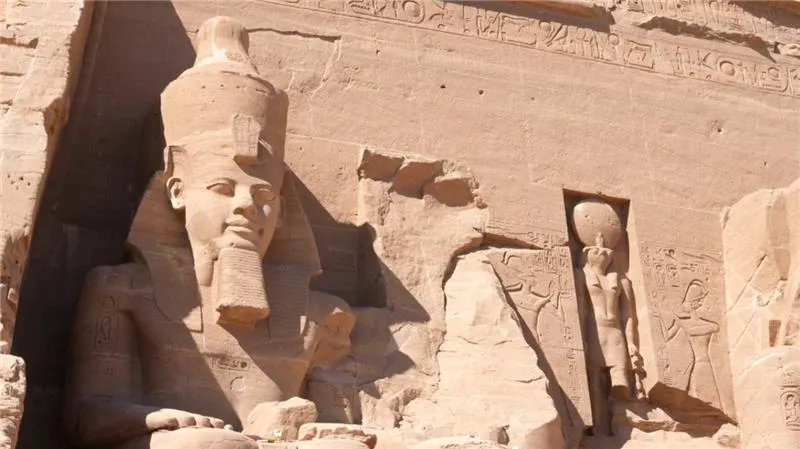
Three thousand years ago, deep in southern Egypt, the awe-inspiring Abu Simbel Temples were carved into sandstone by Pharaoh Ramses II. The Great Temple honors the gods Amon-Ra, Ra-Horakhty, and Ptah—and immortalizes Ramses himself through gigantic statues that guard the entrance. Just a stone’s throw away, the Small Temple stands in loving tribute to Queen Nefertari and Hathor—one of the rare grand temples in ancient Egypt honoring a queen. Long lost beneath the desert sands, the temples were rediscovered in the early 19th century. But in the 1960s, rising waters from the Aswan High Dam threatened to drown them—until UNESCO led a heroic, monumental relocation to higher ground. Twice a year—on February 22 and October 22—the sun’s rays penetrate the sanctuary and illuminate the statues of Ramses, Amon-Ra, and Ra, leaving Ptah, god of the underworld, in darkness—an extraordinary feat of ancient astronomical and architectural brilliance. Abu Simbel—a masterpiece where history, art, and engineering converge. Carved by a god-king, saved for eternity, and still astounding us today.
Comments
No comments yet. Be the first to comment!